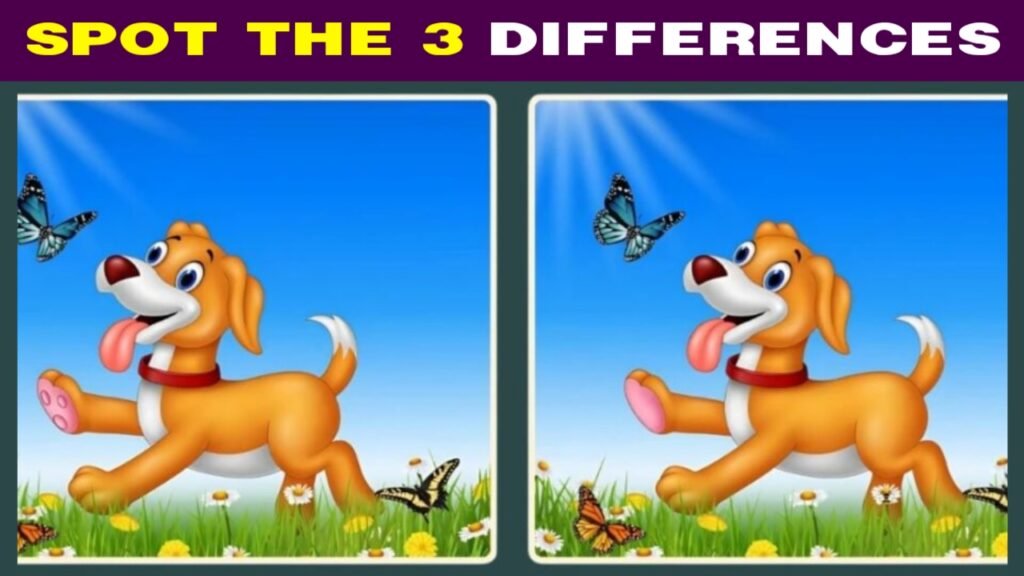
Visual puzzles have a special way of grabbing our attention, and today’s optical illusion does exactly that. At first glance, the two images appear perfectly identical—a happy dog running through a sunny green meadow, butterflies floating gently in the air, and a calm blue sky completing the cheerful scene. But looks can be deceiving. Hidden within these nearly identical pictures are three small differences, and only sharp eyes will catch them all.
This challenge is not just about fun. It tests how carefully you observe details, how patient you are, and how well your brain processes visual information under pressure.
Why Your Brain Gets Fooled So Easily
When we look at images like these, the brain tends to focus on the overall scene rather than tiny details. Because both pictures share the same colors, characters, and background, the mind automatically assumes everything is the same. This mental shortcut saves time in daily life, but optical illusions take advantage of it by hiding changes in places we least expect.
That’s why the differences don’t jump out immediately. You have to slow down, scan each section carefully, and compare both images piece by piece.
How “Spot the Difference” Puzzles Boost Mental Skills
These puzzles are more than casual entertainment. Studies show that visual brain teasers help improve concentration, short-term memory, and attention to detail. For adults, they sharpen focus and reduce mental fatigue. For kids, they support cognitive development and problem-solving skills. Even a few minutes spent on puzzles like this can give your brain a healthy workout.
That’s why these challenges are so popular across the United States—they’re simple, engaging, and surprisingly effective.
Take the Challenge: Did You Find All Three Differences?
Before reading further, take another careful look at both images. Scan the dog from head to tail, notice the butterflies, and pay attention to the small elements in the grass and sky. The differences are subtle, not dramatic, and they are designed to trick even confident puzzle-solvers.
If you think you’ve found all three, let’s see how you did.
The 3 Hidden Differences Explained
The first difference appears on the dog’s face. In one image, the expression is slightly altered due to a small change near the eye area, giving the dog a subtly different look. It’s easy to miss unless you focus closely on facial details.
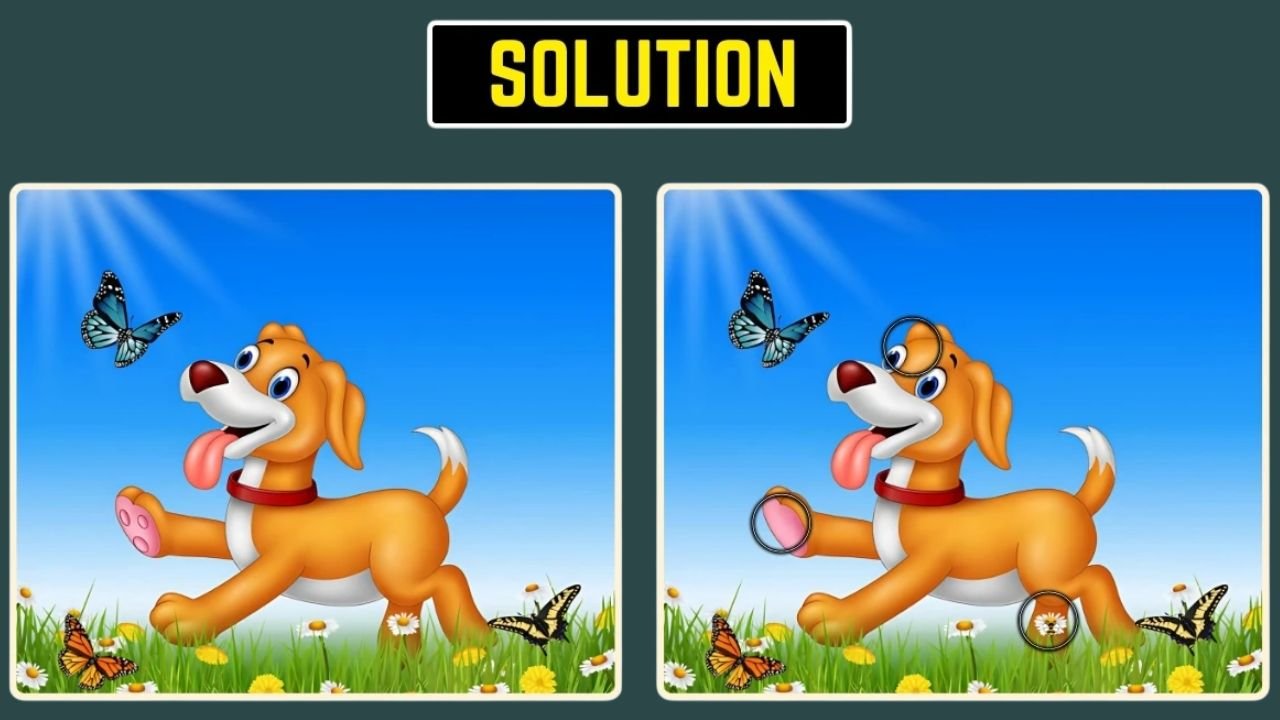
The second difference is found in the dog’s front paw. In one image, the paw is clearly visible with a pink pad, while in the other image, that same paw is missing. Because the dog is in motion, the absence doesn’t immediately feel wrong—until you notice it.
The third difference is hidden in the background. Near the flowers and grass, an extra insect appears in one image that doesn’t exist in the other. This small addition blends perfectly into the scene, making it the hardest difference to detect.
Why These Puzzles Never Get Old
Optical illusion challenges like this remind us how easily the brain can be tricked and how important attention to detail really is. They offer a short escape from daily routines while keeping the mind alert and engaged. Whether you solved it quickly or needed a few tries, the real win is giving your brain a moment to think differently.
If you enjoyed this challenge, keep testing yourself with more visual puzzles. Sometimes, the smallest details reveal the biggest surprises.